The Bulb Trade: How Tulips Were Bought and Sold
The tulip trade was unlike any other trade in the world, because the tulip itself is unlike any other good. A bulb can only be seen and moved for a few weeks a year, in the summer, when it is lifted from the ground. For the rest of the year it is buried, invisible, and impossible to deliver. So the Dutch invented a way to trade tulips they could not see: paper contracts, promising to deliver a bulb of a given variety and weight at the end of the season. It was the world's first futures market in flowers — and it was the mechanism that turned a fashion for tulips into a speculative bubble.
In short
Tulips are traded by weight — the unit was the "aas", about one-twentieth of a gram — and bulbs are only visible and transferable in summer, when they are lifted from the ground (June to September) and replanted in autumn. For the rest of the year, trade was in paper contracts ("windhandel", wind trade): a buyer promised to pay a price for a bulb to be delivered next season, putting down only a small deposit ("wine money", about 2.5%). Contracts changed hands many times without any bulb moving. Trading happened in "colleges" — informal clubs that met in taverns in Haarlem, Amsterdam, Alkmaar, Hoorn, Leiden, and Enkhuizen — not on a formal exchange. This system made it possible to speculate on tulips with very little money, and it made the market fragile: when buyers stopped believing prices would rise, there was nothing underneath.
The seasons of the trade
The tulip trade followed the seasons of the flower. In autumn, bulbs were planted. In winter, they lay buried and invisible. In spring, they flowered — and the flower shows were held, where growers displayed their rarest varieties and buyers could see what they were buying. In summer, the bulbs were lifted from the ground, cleaned, weighed, and stored, and the trade in physical bulbs took place. And in autumn, the bulbs were planted again, and the cycle began anew. The crucial point is that for most of the year, there were no bulbs to trade — only promises. A buyer in January could not see the bulb he was buying, could not hold it, and could not be sure it would even flower as promised. He was buying a piece of paper, and the paper was only as good as the seller's word.
The colleges and the wind trade
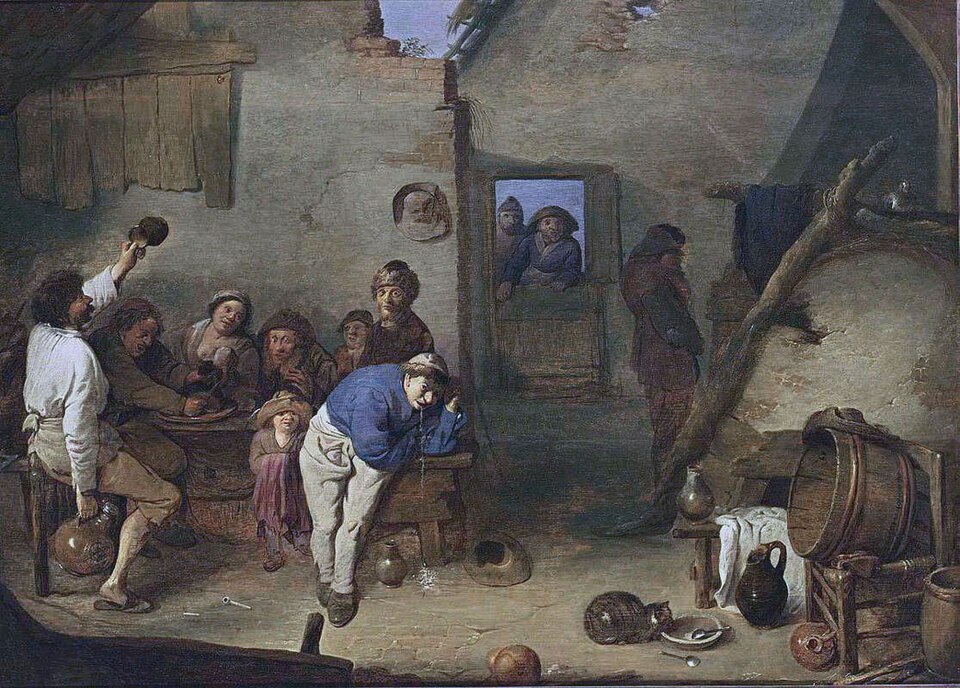
The trade was organised in "colleges" — informal clubs of traders who met in taverns in the main tulip towns. The colleges set their own rules, kept their own records, and settled their own disputes. There was no central exchange, no regulator, and no clearing house. A contract was a private agreement between two men, witnessed by the college, and it was enforced — if at all — by reputation and by the threat of being expelled from the club. The trade was called "windhandel", wind trade, because it was a trade in air: contracts for bulbs that were still in the ground, sold and resold many times over, with no money changing hands except a small deposit. A bulb could change hands ten times in a winter without ever leaving the ground, and each time its price rose a little. The system worked as long as everyone believed the price would keep rising. When that belief failed, the system collapsed.
Who was trading?
The early tulip trade was a trade among the rich: collectors, merchants, and growers who knew the flower and loved it. But by 1636, the trade had spread. Ordinary people — craftsmen, shopkeepers, and small traders — were joining the colleges, buying contracts for bulbs they had never seen, in the hope of selling them on for a profit. The trade was no longer about the flower. It was about the price. And the price was rising so fast that it seemed like free money: buy a contract in the morning, sell it in the afternoon, and pocket the difference. The colleges did not stop this — they welcomed it, because more traders meant more business. But the new traders did not know the flower, did not understand the contracts, and did not have the money to pay if the price fell. When it did fall, they were the ones who were ruined — or, as modern historians argue, the ones who were supposed to have been ruined, in a story that was exaggerated for effect.
The tulip book
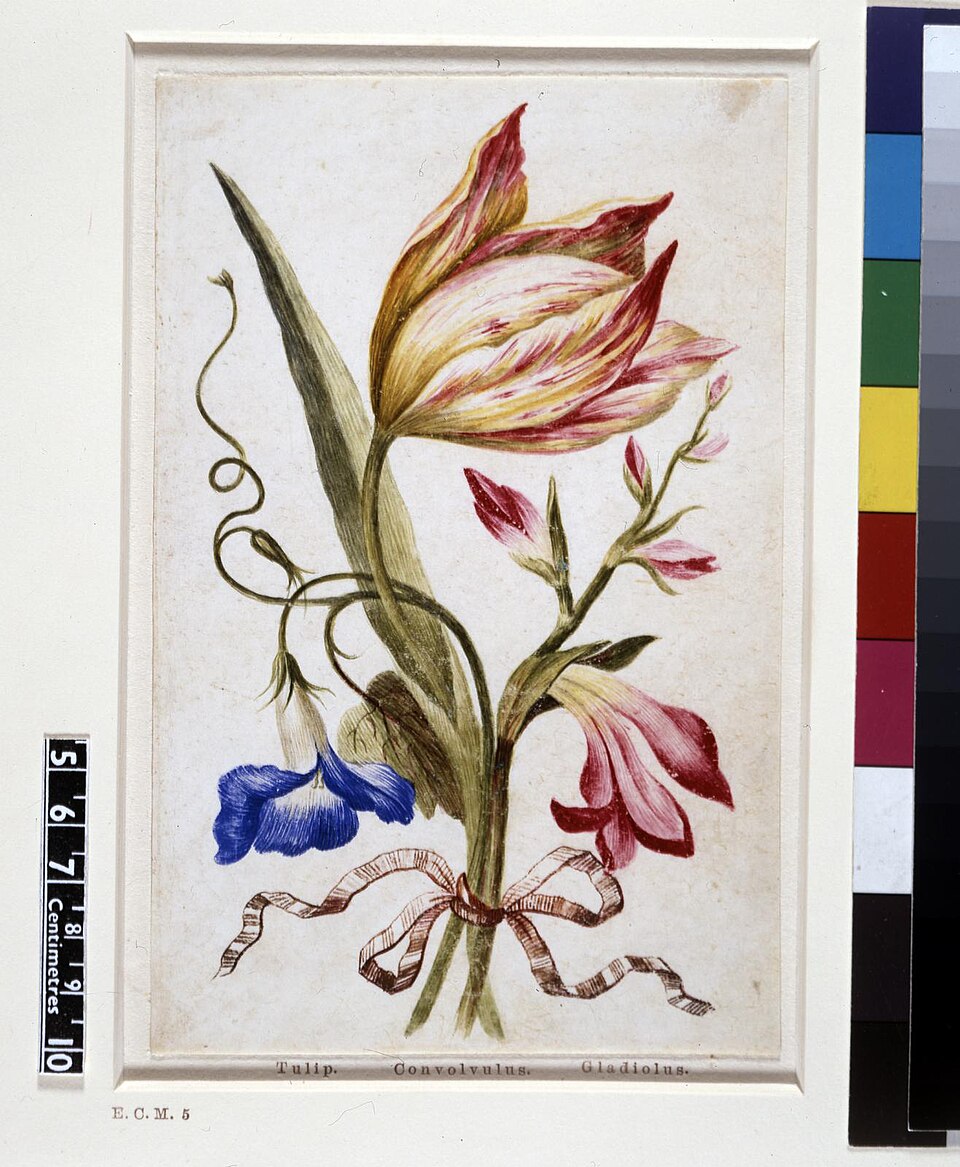
Because the flower could only be seen for a few weeks a year, the trade depended on pictures. Growers kept "tulip books" — albums of watercolour paintings showing each variety in bloom, with its name and price — and buyers chose from the book, not from the flower. The paintings were beautiful, and they are now some of the most valuable documents of the mania: they show exactly what the prized varieties looked like, and they are the reason we know what the Semper Augustus looked like, even though the flower itself is extinct. The tulip book was, in a sense, the first catalogue of a speculative asset: a picture of something you could not see, at a price you could not believe, sold on the promise that it would be worth more tomorrow.
| Term | Meaning |
|---|---|
| Aas | The unit of weight for bulbs — about one-twentieth of a gram |
| Windhandel | "Wind trade" — trading in paper contracts for bulbs still in the ground |
| Wine money | The deposit paid on signing a contract — about 2.5% of the price |
| College | An informal club of tulip traders, meeting in a tavern |
| Tulip book | An album of paintings showing each variety, used as a catalogue |
Sources: Wikipedia, “Tulip mania”; Anne Goldgar, “Tulipmania” (2007); Amsterdam Tulip Museum, “Holland and Tulipmania”; Earl Thompson, “The Tulipmania: Fact or Artifact?” (2007). Checked 29 November 2026.