Semper Augustus: The Most Famous Tulip in History
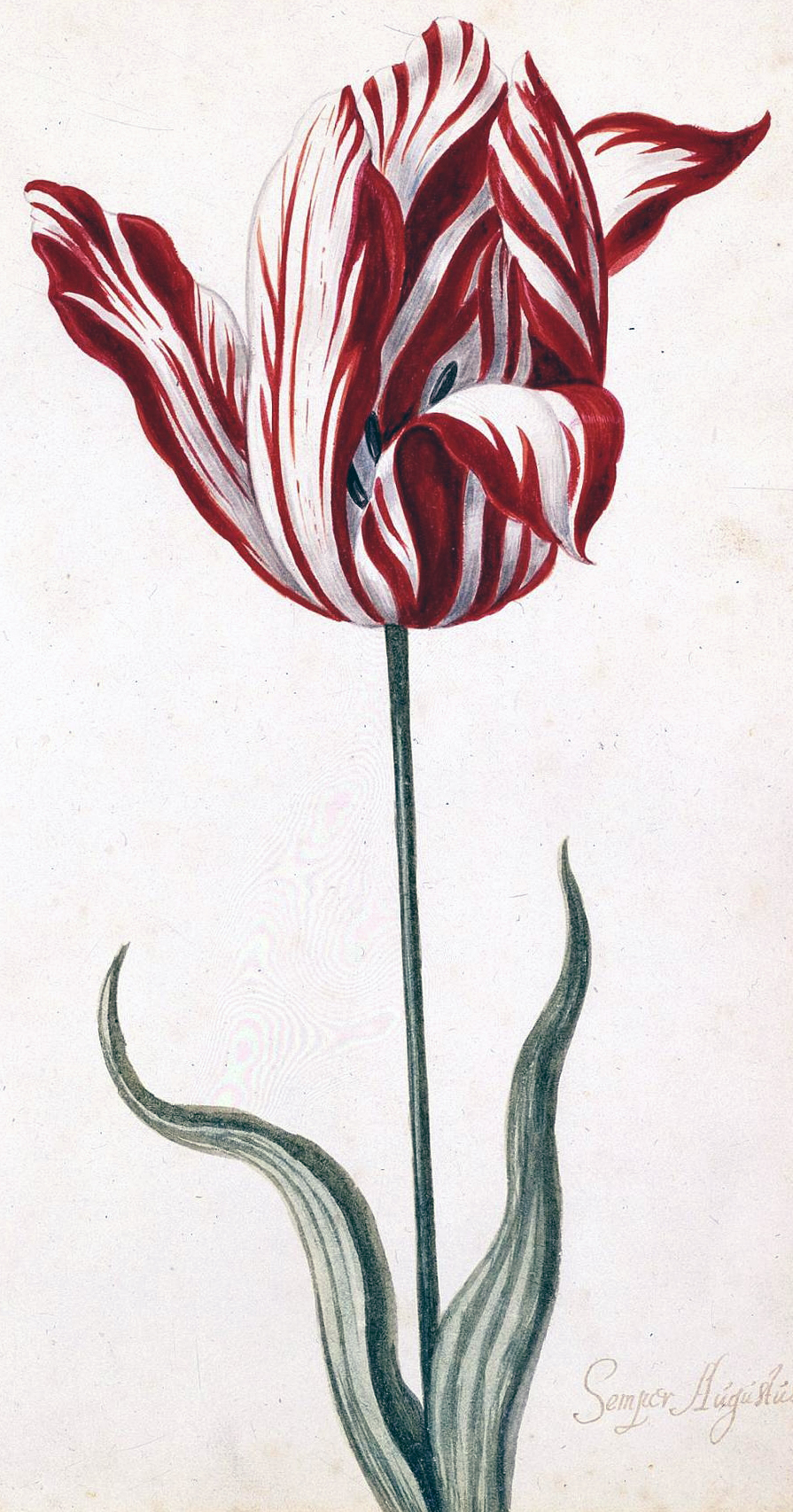
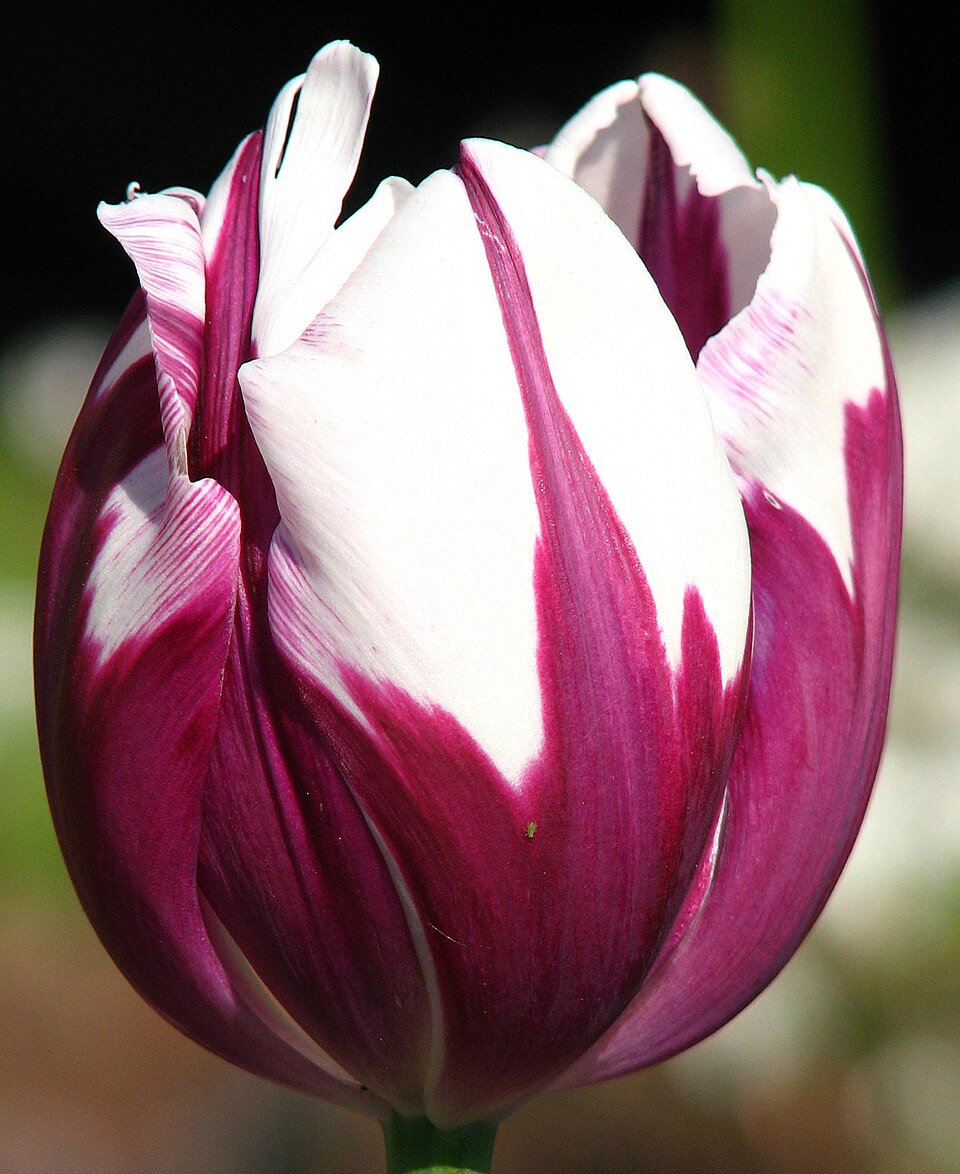
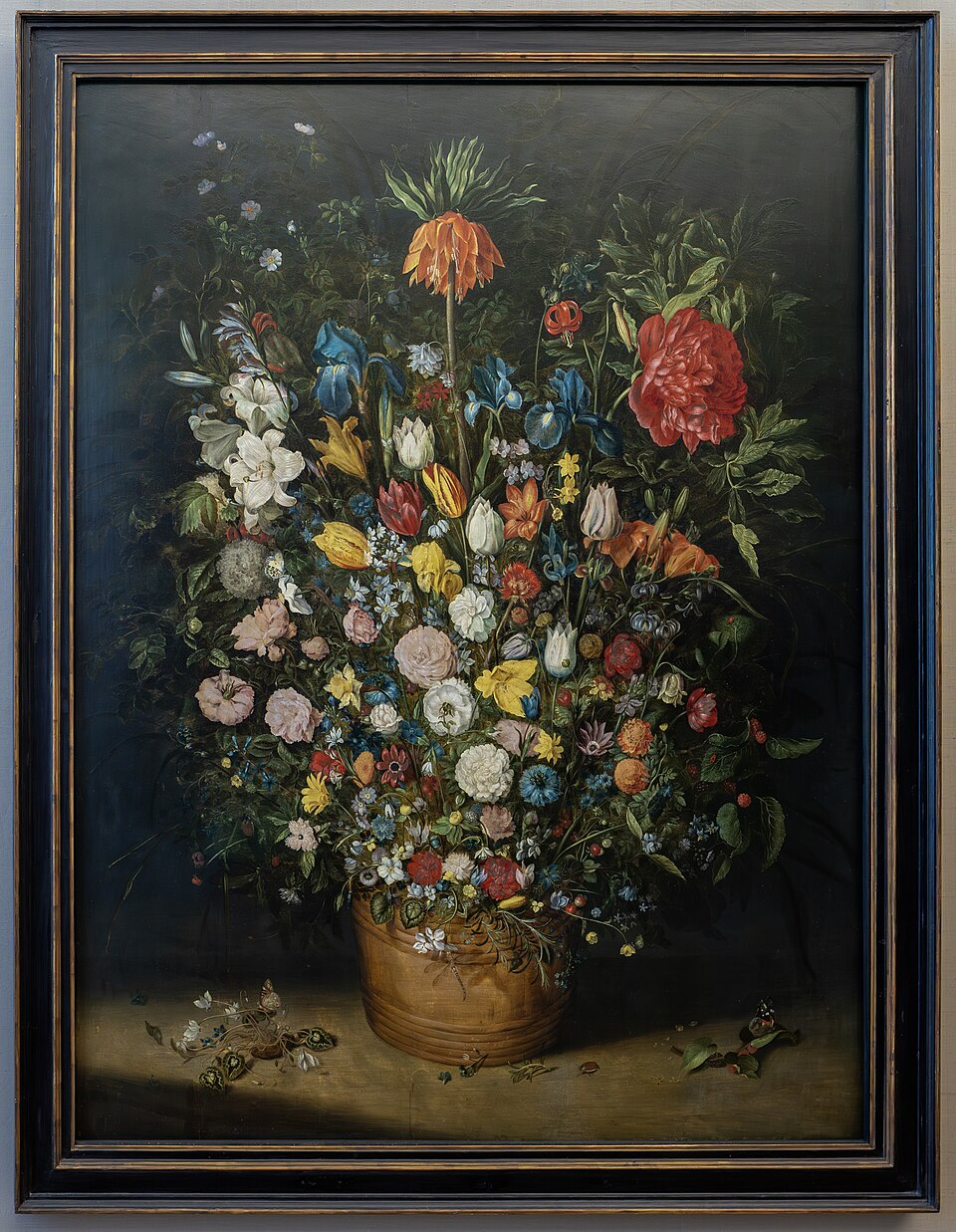
The most famous tulip in history never existed in more than a handful of bulbs, and it is extinct today. The Semper Augustus was a white tulip streaked with crimson flames, so beautiful that it was painted more often than any other flower of its age, and so rare that a single bulb was offered for more than the price of a grand house. It was the ultimate tulip — and it owed its beauty to a disease. The flower that made the mania was a sick flower, and no one at the time knew it.
In short
The Semper Augustus was a "broken" tulip — white petals streaked with deep red flames — and the most prized variety of the mania. In the 1620s there were only about a dozen known Semper Augustus bulbs in existence. It was offered for sale at 3,000 to 4,200 guilders (depending on weight), and at its peak for as much as 5,500 to 6,000 guilders — more than a grand canal house in Amsterdam, and about twenty times the annual income of a skilled craftsman (about 300 guilders a year). The streaks were caused by the Tulip Breaking Virus, a mosaic virus spread by aphids, which no one in the seventeenth century understood. The virus weakens the bulb, so broken varieties are hard to propagate: their offsets often revert to solid colour, and the supply can never grow fast. The Semper Augustus is extinct today, like most of the broken varieties of the mania.
What made it beautiful
The Semper Augustus was a "broken" tulip, and to understand it you have to understand what "broken" means. A normal tulip has solid-coloured petals — red, yellow, white, or pink, all one colour. A broken tulip has petals streaked or flamed with a second colour: white petals with red flames, yellow petals with red stripes, or red petals with white feathers. The effect is spectacular, and in the seventeenth century it was mysterious. No one knew why some tulips were broken and others were not, and no one could make a broken tulip on purpose. The flower was, in the language of the time, a wonder of nature — a freak, a miracle, and a treasure. Modern science has solved the mystery: the streaks are caused by the Tulip Breaking Virus, a mosaic virus that infects the bulb and disrupts the pigment in the petals. The virus is spread by aphids, from one plant to another, and it cannot be controlled. The beauty of the broken tulip is, quite literally, a symptom of a disease.
Why it was so rare
The virus that made the Semper Augustus beautiful also made it rare. A tulip is propagated in two ways: from seed, which takes seven years to flower and produces unpredictable results, and from offsets — the small bulbs that grow beside the mother bulb each year. A healthy tulip produces several offsets a year, and its stock grows quickly. A broken tulip, weakened by the virus, produces few offsets, and the offsets often revert to solid colour — the virus does not always pass to the daughter bulbs, and when it does not, the flower is plain. The result is that a broken variety can never be mass-produced: its supply grows slowly, if at all, while demand grows fast. In the 1620s, there were only about a dozen Semper Augustus bulbs known to exist, and the number grew only slowly. The scarcity was real, and it was the reason the price was so high. The Semper Augustus was not expensive because people were mad. It was expensive because there were almost none of them, and everyone wanted one.
The price, and what it meant
The prices quoted for the Semper Augustus vary between sources, and this site gives the range rather than a single figure. In 1623, a Semper Augustus bulb was sold for 12,000 guilders, according to one account — though this figure is disputed, and may have been for a bulb of exceptional weight. In 1624, another sold for 1,200 guilders. In 1625, a bulb was offered at 5,500 guilders. In 1637, at the peak of the mania, the asking price was 5,500 to 6,000 guilders. The most commonly cited figure is the one from the Dutch records: a bulb offered for 3,000 to 4,200 guilders, depending on its weight, at a time when a skilled craftsman earned about 300 guilders a year. Whatever the exact figure, the meaning is the same: a single flower bulb cost more than a house, and about twenty times a year's wages. The Semper Augustus was not just a flower. It was the most expensive object in Holland that was not made of gold.
The flower that died out
The Semper Augustus is extinct. Like most of the broken varieties of the mania, it died out because the virus that made it beautiful also weakened it, and because, after the crash, no one wanted to grow it. The broken tulips that survive today are modern varieties, bred by crossing and selection, and they are not the same flowers. The Semper Augustus survives only in paintings — in the tulip books, in the still lifes, and in the famous watercolours that were made to record it. It is a strange fate for the most famous flower in history: to be remembered only in pictures, because the flower itself could not survive. But the pictures are enough. They show a white flower, streaked with crimson, that was once worth more than a house — and they are the reason we still know its name, four hundred years later.
| Variety | Year | Price (guilders) |
|---|---|---|
| Semper Augustus | 1623 | 12,000 (disputed; exceptional weight) |
| Semper Augustus | 1624 | 1,200 |
| Semper Augustus | 1625 | 5,500 |
| Semper Augustus | 1637 | 5,500–6,000 (peak asking price) |
| Viceroi (Viceroy) | 1637 | 2,500–4,203 |
| Admiral van Enkhuizen | 1637 | 5,200 |
| Skilled craftsman's annual wage | 1637 | About 300 |
Sources: Wikipedia, “Tulip mania”; Encyclopaedia Britannica, “Tulip Mania: How a Plant Virus Fueled a Speculative Frenzy”; Amsterdam Tulip Museum, “Holland and Tulipmania”; Peter Garber, “Famous First Bubbles” (1990); Earl Thompson (2007). Checked 29 November 2026.