Tulip Mania in Culture: Mackay, Dumas, and the Paintings
Tulip mania lives on not in the economics textbooks, but in the culture: in a book that made it famous, in a novel about a black tulip that never existed, and in the paintings that made the flower immortal. The story of the mania is, in the end, a story about stories — about how a small market crash in a small country became the most famous bubble in history, because the people who wrote about it told it well. This chapter is about the books, the novel, and the paintings that kept the tulip alive.
In short
Tulip mania entered popular culture through Charles Mackay's "Extraordinary Popular Delusions and the Madness of Crowds" (1841), which made the story famous in the English-speaking world — and which, as the previous chapter explains, exaggerated it. Alexandre Dumas's novel "The Black Tulip" (1850) told a fictional story of a contest to grow a black tulip in Haarlem, and it is still read today. And the Dutch still-life painters of the seventeenth century — Ambrosius Bosschaert, Jan Brueghel the Elder, and others — painted the tulips of the mania so beautifully that their paintings are now worth far more than the bulbs they depict. The phrase "tulip mania" is now the standard metaphor for any speculative bubble, from the dot-com boom to the crypto craze.
Mackay's book
Charles Mackay's "Extraordinary Popular Delusions and the Madness of Crowds", published in 1841, is the book that made tulip mania famous. Mackay was a Scottish journalist, and his book was a collection of stories about crowds going mad: the South Sea Bubble, the Mississippi Bubble, the Crusades, and — in the chapter everyone remembers — the tulip mania. Mackay's account is vivid, entertaining, and, as modern historians have shown, largely invented. He claimed that a Semper Augustus bulb was traded for twelve acres of land, that the mania had gripped the whole of Holland, and that the crash had ruined families and shocked Dutch commerce. His book was a bestseller, and it has been in print ever since. It is the reason that, when a modern bubble bursts, the newspapers reach for the tulip. Mackay's book is not good history, but it is great storytelling — and the story it told has outlived the event it described by nearly two centuries.
Dumas and the black tulip
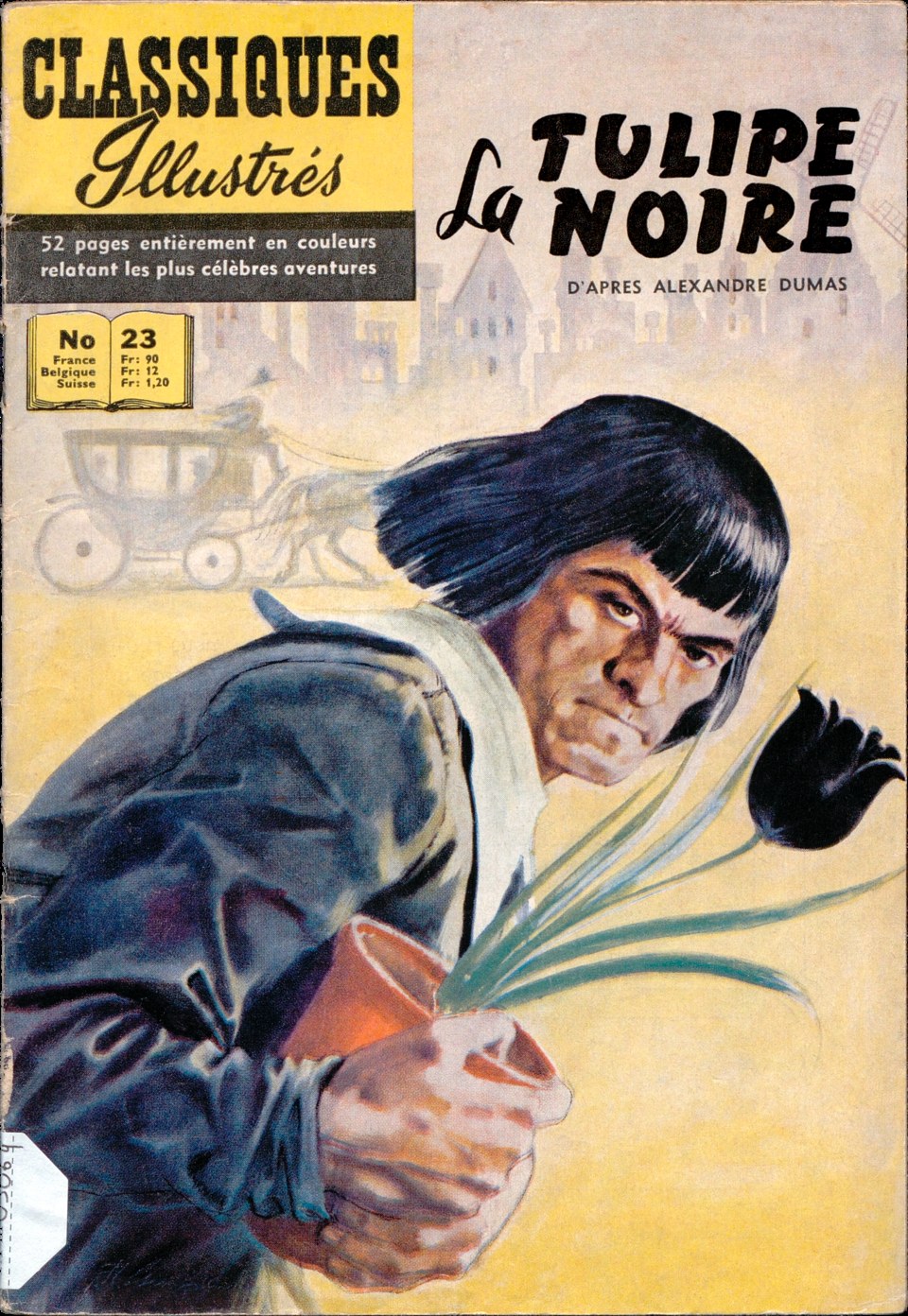
Alexandre Dumas, the French novelist who wrote "The Three Musketeers" and "The Count of Monte Cristo", also wrote a novel about tulips. "The Black Tulip" (1850) is set in Haarlem in 1672, thirty-five years after the mania, and it tells the story of a young gardener, Cornelius van Baerle, who is trying to grow a black tulip — a flower that does not exist in nature — in order to win a prize of 100,000 guilders offered by the city of Haarlem. The novel is a romance, not a history, and its tulip is fictional: no black tulip has ever been grown, though dark purple varieties come close. But the novel captures something true about the tulip: that it was, and still is, a flower that people will go to extraordinary lengths to grow, to own, and to show off. "The Black Tulip" is still read today, and it is the most famous novel ever written about a flower.
The paintings
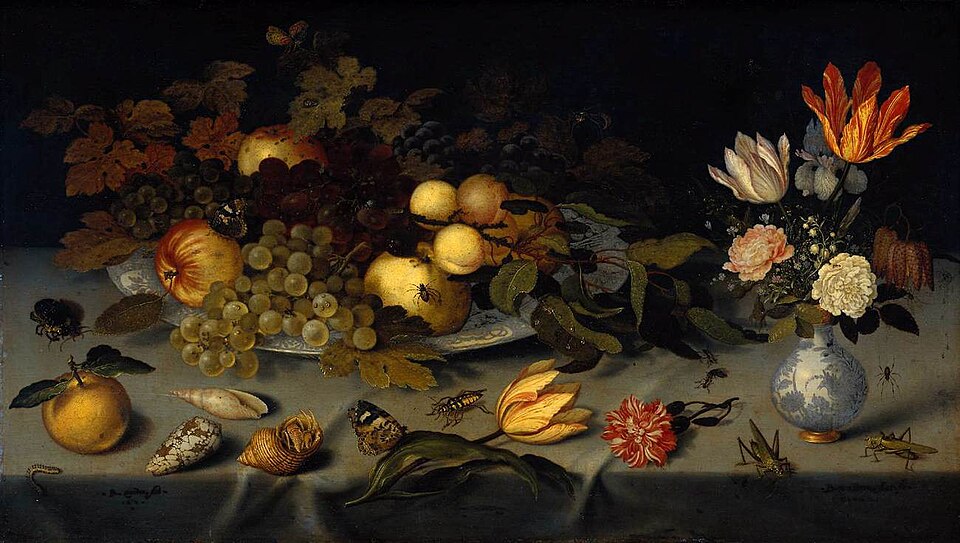
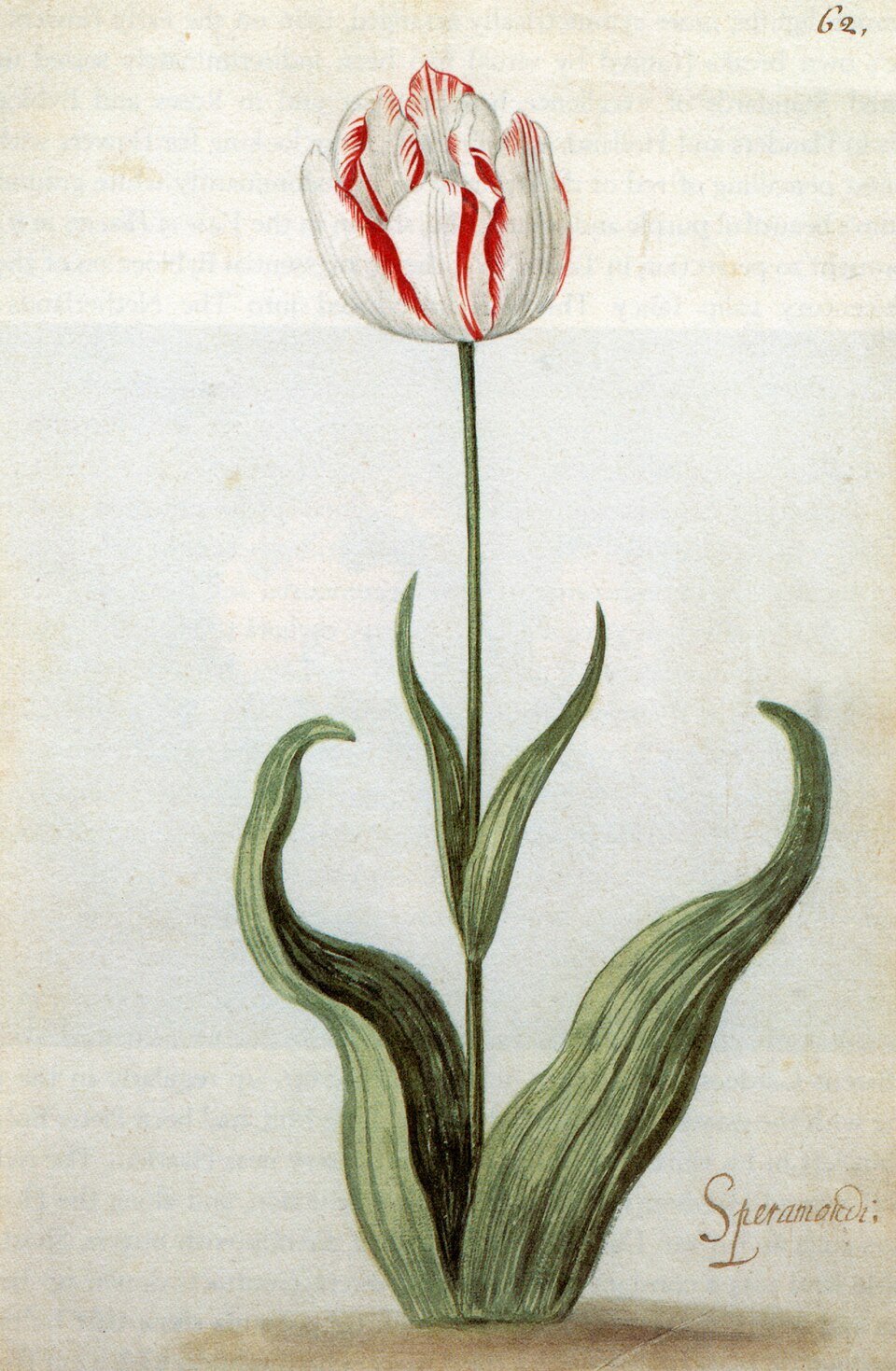
The most lasting cultural legacy of tulip mania is the paintings. The Dutch still-life painters of the seventeenth century — Ambrosius Bosschaert the Elder, Jan Brueghel the Elder, Balthasar van der Ast, and others — painted tulips with a precision and a beauty that has never been surpassed. Their still lifes show vases of flowers, including the broken tulips of the mania, painted petal by petal, in colours that are still vivid four hundred years later. The paintings were, in part, a record: a grower who owned a rare tulip would have it painted, so that he could show it off even when it was not in bloom, and so that buyers could see what they were buying. The paintings are now worth far more than the bulbs they depict — a Bosschaert still life sells for millions of dollars, while the most expensive tulip bulb in history cost a few thousand guilders. The flower is extinct. The paintings are immortal.
The metaphor
Today, "tulip mania" is the standard metaphor for any speculative bubble. When the dot-com bubble burst in 2000, the newspapers called it a tulip mania. When house prices soared before 2008, they called it a tulip mania. When the price of Bitcoin rose and fell, they called it a tulip mania. The metaphor is so familiar that most people who use it do not know the history behind it — and, as this site has shown, the history is more complicated than the metaphor suggests. But the metaphor survives because it is vivid: a flower, a bubble, a crash. It is the simplest story in finance, and it is the story that everyone remembers. The tulip, which was once worth more than a house, is now worth a metaphor — and the metaphor is worth more than the flower ever was.
| Work | Author / artist | Year |
|---|---|---|
| Extraordinary Popular Delusions | Charles Mackay | 1841 |
| The Black Tulip (novel) | Alexandre Dumas | 1850 |
| Floral still lifes | Ambrosius Bosschaert, Jan Brueghel | 1600s–1630s |
| Tulipmania (history) | Anne Goldgar | 2007 |
Sources: Charles Mackay, “Extraordinary Popular Delusions and the Madness of Crowds” (1841); Alexandre Dumas, “The Black Tulip” (1850); Wikipedia, “Tulip mania” and “The Black Tulip”; Anne Goldgar, “Tulipmania” (2007). Checked 29 November 2026.